
Polished concrete · Commercial · Huntsville, AL
Commercial Concrete Polishing
$4–$8/sq ft · cheaper per foot as the floor gets bigger
Commercial concrete polishing turns the slab you already own into the finished floor — diamond grinding, a densifier, then honing to whatever gloss the space calls for. At $4–$8 per square foot, with the rate falling as footage climbs, it's usually the cheapest durable floor a big building can buy.
The commercial case
Why big floors get polished, not coated
This is the commercial arm of our concrete polishing work, and it's where the math gets lopsided. Mobilizing diamond grinders costs roughly the same whether the floor is 800 square feet or 30,000 — so commercial concrete polishing runs $4–$8 per square foot in Huntsville, and the per-foot price drops as the square footage climbs. Coatings move the other direction: every added foot is added material. The full math is on the polishing cost page.
The process is grinding, hardening, honing. We cut the slab flat with diamond tooling, then flood it with densifier — a liquid silicate that soaks into the slab and chemically hardens the surface. Then progressively finer passes until the floor hits the gloss you specced. A satin commercial floor stops near 400 grit; a high-gloss finish runs 1500 to 3000 grit.
Which gloss you want depends on the building. Research Park flex space usually lands at semi-gloss — clean enough for a client walkthrough, forgiving enough for the loading dock. Decatur manufacturing floors stay at satin, where forklift lanes hide their wear. Retail along the Parkway goes high gloss, because the floor is part of the merchandising.
The slab you have is probably good enough. We grind a test panel before any large quote, so you're looking at your concrete, not a brochure's.
| Facility | Finish | Why |
|---|---|---|
| Warehouse / distribution | Satin, ~400 grit | Hides forklift wear lanes |
| Manufacturing / shop | Satin–semi-gloss | Grip and easy re-burnish |
| Flex / office-warehouse | Semi-gloss, ~800 grit | Client-ready, low upkeep |
| Retail / showroom | High gloss, 1500–3000 | Light bounce, merchandising |
| Item | Number |
|---|---|
| Price range | $4–$8/sq ft |
| Typical slab strength | 3,000–4,000 psi |
| Traffic after finishing | Same day, per section |
| Recoat schedule | None — re-burnish lanes |
Price a commercial polish
Square footage, what's on the slab now, and what runs across it. That's enough for a phone range.
What facilities teams notice
Light, dust, and forklifts — the three quiet wins
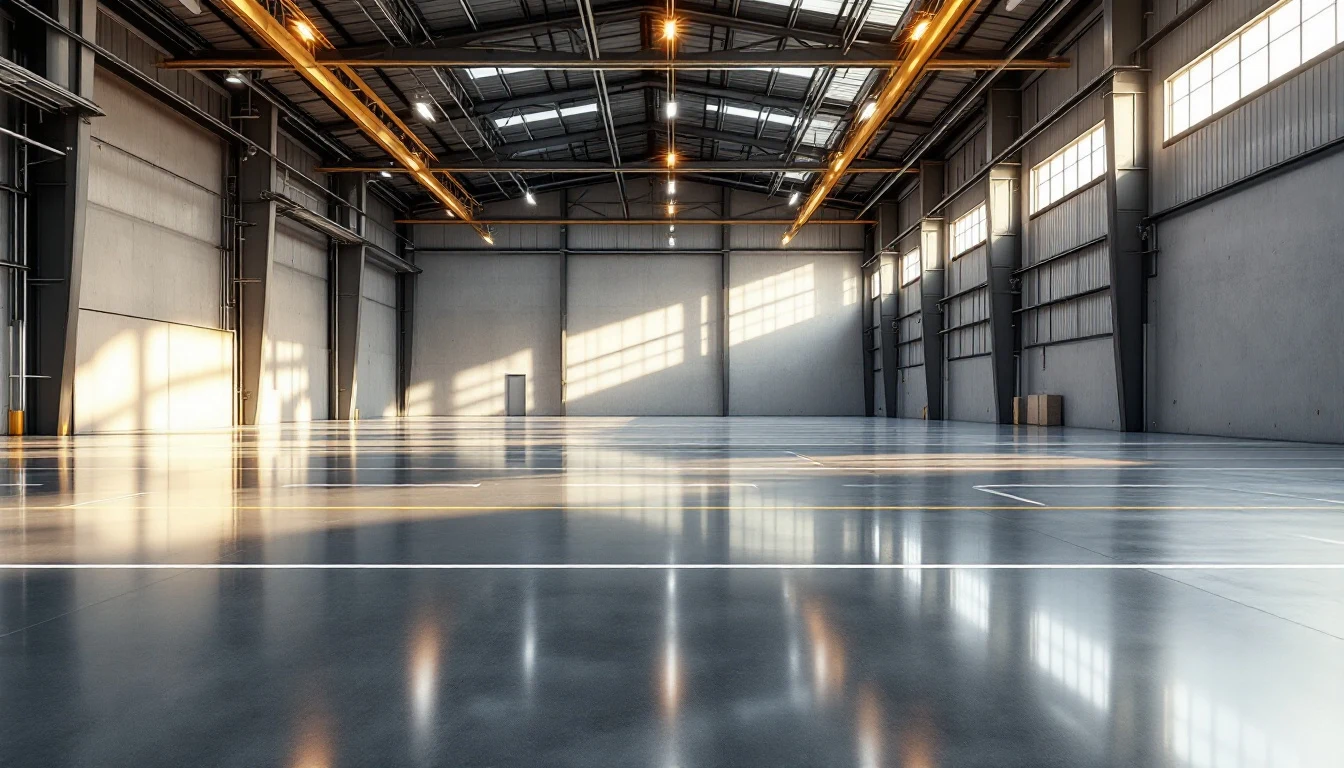
Light. A honed floor reflects highbay light back down into the aisles instead of absorbing it. Same fixtures, brighter building — and the higher you spec the gloss, the more of your lighting you get back. In a warehouse where pickers read labels all shift, that's not cosmetic.
Dust. Bare concrete sheds fine cement dust forever; it ends up on inventory, in HVAC filters, and on everything in a clean assembly area. Densified, polished concrete shuts that down at the surface — the silicate hardens the slab so it stops shedding. During pollen season, when every floor in North Alabama turns yellow anyway, a polished one wipes clean with a dust mop instead of holding the grime in its pores. The routine is in the polished concrete maintenance guide.
Forklifts. A coating under forklift traffic is a film waiting for an edge. A polished floor has no film — the wear surface is the 3,000 to 4,000 psi concrete itself. Wheels will eventually dull the sheen in the main lanes, and the answer is a re-burnish pass, not a tear-out.
One honest boundary: polishing doesn't waterproof anything, and it can't carry safety striping or chemical containment the way a membrane does. Wash-down rooms and chemical exposure belong on the commercial epoxy flooring page — and if you're torn, the polished vs epoxy comparison settles it by use case.
Commercial polishing, deeper
What It Costs
The published $4–$8/sq ft range, and why a 30,000 sq ft floor prices better than a 3,000 sq ft one.
Run the numbers →Maintenance Reality
The dust-mop routine, the re-burnish schedule, and the three things that actually dull a polished floor.
Care guide →Residential Polishing
The same grind-densify-hone process scaled to basements, garage gyms, and main floors.
Home floors →Questions we actually get
How long does it take to polish a warehouse floor?
Can polished concrete handle forklift traffic?
Will a polished floor make our warehouse brighter?
Do we have to shut down while you polish?
Get a number, not a runaround
Tell us what you're working with and we'll give you a straight price range on the phone. No pressure visit required to hear a number.