
Floor problems · Huntsville, AL
Dusty Concrete Floor
a surface problem with one permanent fix
Bare concrete dusts because its surface cream — the fine cement paste that floats to the top during finishing — keeps abrading into powder for the life of the slab. Sweeping doesn't fix it, sealers only pause it, and waiting doesn't outlast it. The permanent fix is to make the surface itself harder — which is exactly what densified, polished concrete is. Here are all three options, priced honestly.
The mechanism
Why bare concrete never stops dusting
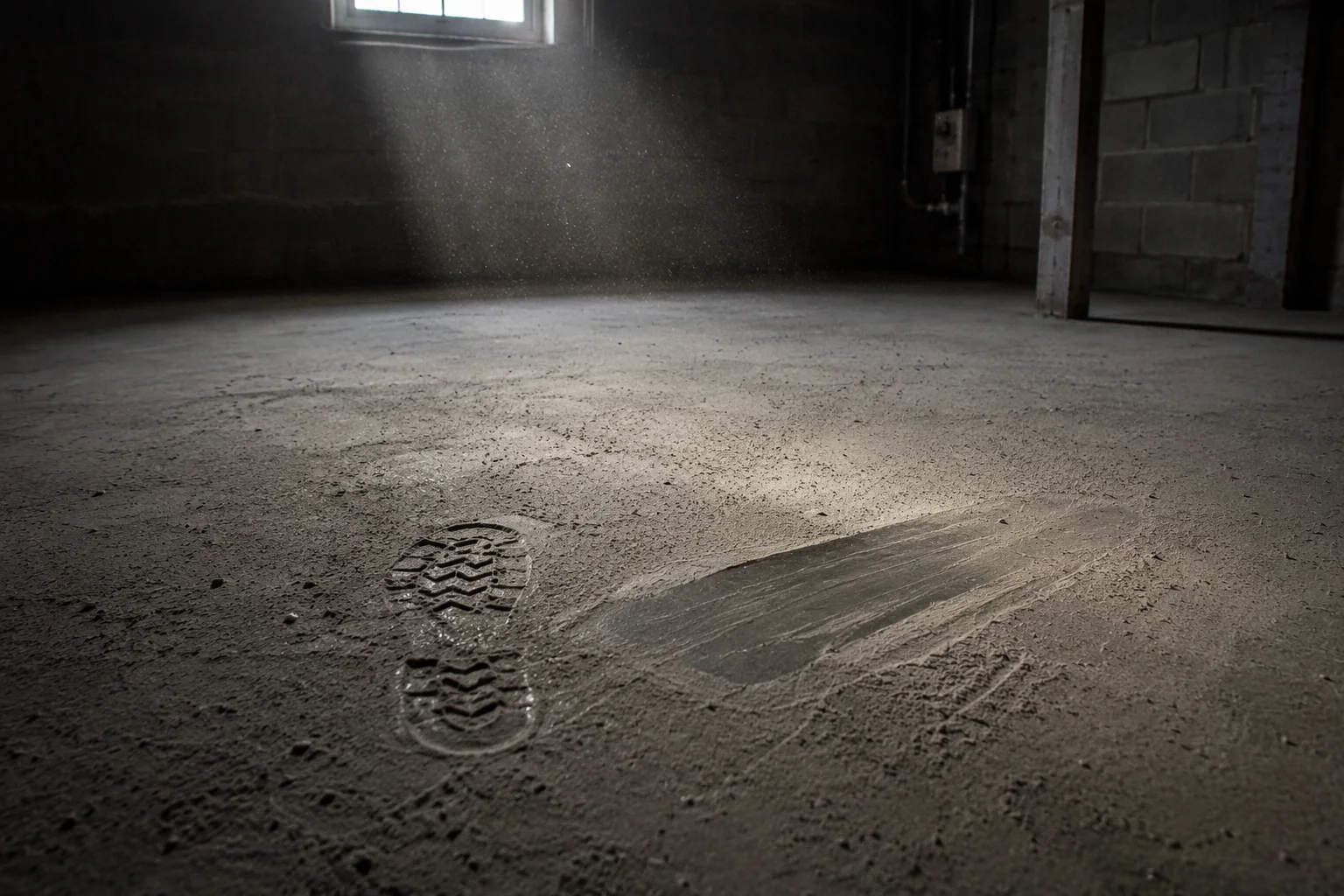
When concrete is finished, troweling floats the heaviest aggregate down and pulls a thin layer of fine cement paste to the top. That layer — the surface cream — is the smoothest part of the slab and the weakest. Every footstep, tire, and pallet jack abrades a little of it into powder.
Here's the part that surprises people: the slab never runs out. Wear through the cream and the floor starts shedding fines from the concrete below it. Dusting isn't a phase your floor is going through. It's what unsealed, unhardened concrete does, and the fix is the core of what our concrete polishing service exists to do.
You notice it most where the stakes are real — the home gym where dust films the equipment, the basement workshop, the warehouse where it settles on inventory faster than anyone can wipe shelves.
One floor, three ways to respond. The table is the short version; the rest of the page is the honest version.
| Option | Cost | What you actually get |
|---|---|---|
| Live with it | $0 today | Dust on everything, forever — the cream never stops abrading |
| Topical sealer | Cheapest upfront | Reapply every 1–2 years; wears through in traffic lanes first |
| Densify + polish | $4–$8/sq ft, once | Chemically hardened surface — dust mop and get on with your life |
Done sweeping powder?
Tell us the square footage and what the room does. The phone estimate takes five minutes.
The band-aid
Why sealers are a subscription, not a fix
A topical sealer is a film of acrylic sitting on top of the soft surface. It does stop dust — sincerely, it does.
Then it wears. A topical acrylic sealer stops the dust for roughly 1–2 years, then wears through in the traffic lanes and has to be stripped or recoated. The dusting comes back lane by lane, in the exact paths people walk and carts roll, while the corners stay glossy enough to remind you what you paid for. Recoat it, and you've signed up for the cycle; skip a cycle, and stripping the failing remainder costs more than the sealer ever did.
For a space you'll use for a year or two, that trade can be fine — we'd rather tell you that than upsell you. For a floor you'll own for decades, you're renting a solution to a problem you could buy out of once.
The permanent fix
Densified and polished: dust-proof from within
The permanent fix doesn't add a layer — it changes the concrete. We grind off the weak cream entirely, then flood the exposed surface with a densifier. A silicate densifier soaks into the concrete and reacts with it chemically, hardening the surface in one treatment — there's nothing on top to wear off.
Polishing then hones that hardened surface to the gloss you want. The result can't shed cream because the cream is gone, and can't wear through to soft material because the surface itself was hardened. Maintenance drops to a dust mop — the full routine is in the polished concrete maintenance guide, and it's short.
Densifying and polishing runs $4–$8 per square foot in Huntsville and replaces a resealing schedule that never ends.
The complete pricing math, including why bigger floors cost less per foot, is on the polishing cost page. Run it against a decade of sealer cycles before you decide the sealer is the cheap option.
Keep researching
The Polishing Service
Grinding, densifying, and honing — what each step does to your slab.
See the process →What It Costs
The published $4–$8/sq ft range and the six factors that set your number.
Run the numbers →Maintenance Reality
What a polished floor asks of you afterward. Spoiler: it fits in one short page.
Care guide →Questions we actually get
Why does sweeping my concrete floor seem to make more dust?
Is concrete dust dangerous?
Can I just buy densifier and mop it on myself?
Does a dusty floor mean my concrete was a bad pour?
Get a number, not a runaround
Tell us what you're working with and we'll give you a straight price range on the phone. No pressure visit required to hear a number.