
Service area · Harvest, AL
Concrete Polishing in Harvest
$4–$8/sq ft · best booked while the house is still studs
Concrete polishing in Harvest runs $4–$8 per square foot. Harvest is new-build country, and new builds hide a scheduling secret: the cheapest, cleanest polished floor you'll ever own is the one done before you move in. Most owners find this page two years too late. If you found it during framing — good timing.
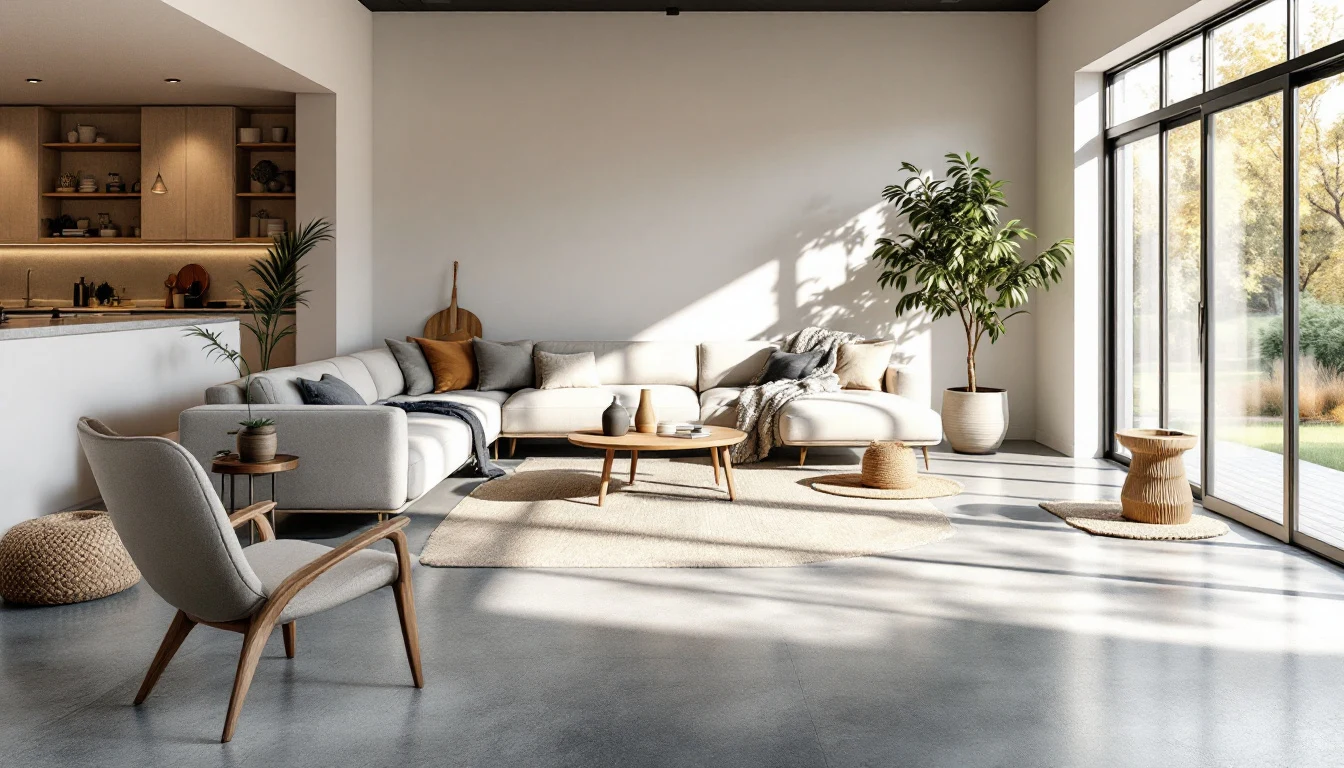
Harvest, specifically
The during-construction play
Concrete polishing grinds your slab with diamond tooling, hardens it with a densifier — a liquid silicate that reacts into the surface — and hones it to the gloss you pick. In Harvest, the interesting question isn't what. It's when.
The best window to polish a new-construction slab is after drywall and before trim, when the floor is empty and the damage-makers are done. Painters are finished dropping things, the HVAC crew's ladders are gone, and every square foot is reachable. We've polished occupied Harvest homes plenty — it works, we section it, you live around it — but the empty-house version costs less and nobody has to relocate a sectional.
Then there's the clay. Everything built off the Sparkman corridor sits on soil that swells and shrinks with the seasons, and plenty of Harvest owners assume that rules out a hard finished floor. It's closer to the opposite. A polished floor on moving clay can develop a new hairline crack, but it cannot peel, because there is no film to lose its bond. The slab will do what Harvest slabs do; a polish just refuses to make it worse. The same logic from the coating side — flexible products, honored joints — is on the Harvest coating page.
Garage gyms are the most-requested polished floor in Harvest, because dropped plates that gouge a coating just bounce off densified concrete. Third-bay gyms, shop corners with a rack and a fan, bonus-room slabs that were going to get cheap LVP — that's the local polishing portfolio. The choice between polish and flake comes down to look and use, and the side-by-side is at polished concrete vs epoxy.
| Construction stage | Polish verdict |
|---|---|
| Slab cured <28 days | Wait — concrete too green to grind well |
| Framing / rough-in | Quote it now, schedule for later |
| Drywall hung, pre-trim | THE window — empty, reachable, cheap |
| Post-trim, pre-move-in | Still good — light masking around base |
| Occupied | Fine — sectioned, slower, a little more money |
One call to your builder is all the coordination this takes.
Building in Harvest?
Tell us your drywall date. We'll slot the polish where it costs you the least.
Polishing, deeper
The Polishing Service
Process, gloss levels, and the no-coating argument — the full hub page.
Full service page →What It Costs
The published range and why an empty new build lands at the friendly end of it.
See pricing →Caring for the Finish
Dust mop, neutral cleaner, done. Plus the three habits that actually dull a polish.
Care guide →Harvest questions
We're building in Harvest right now. When should polishing happen?
Our clay moves every season. Doesn't that ruin a polished floor?
Gym in the third bay — polish or rubber mats over a coating?
Does new Harvest concrete need to cure before polishing, like it does before coating?
Get a number, not a runaround
Tell us what you're working with and we'll give you a straight price range on the phone. No pressure visit required to hear a number.