
Service area · Huntsville, AL
Garage Floor Coating in Huntsville
$5–$9/sq ft · same rate citywide
Coating a garage floor in Huntsville costs $5–$9 a square foot — $2,000–$3,800 for most 2-car garages — and the right prep depends a lot on whether your slab went down in 1948 or 2018. We work both, most weeks.
The number first
What a coated garage floor costs in Huntsville
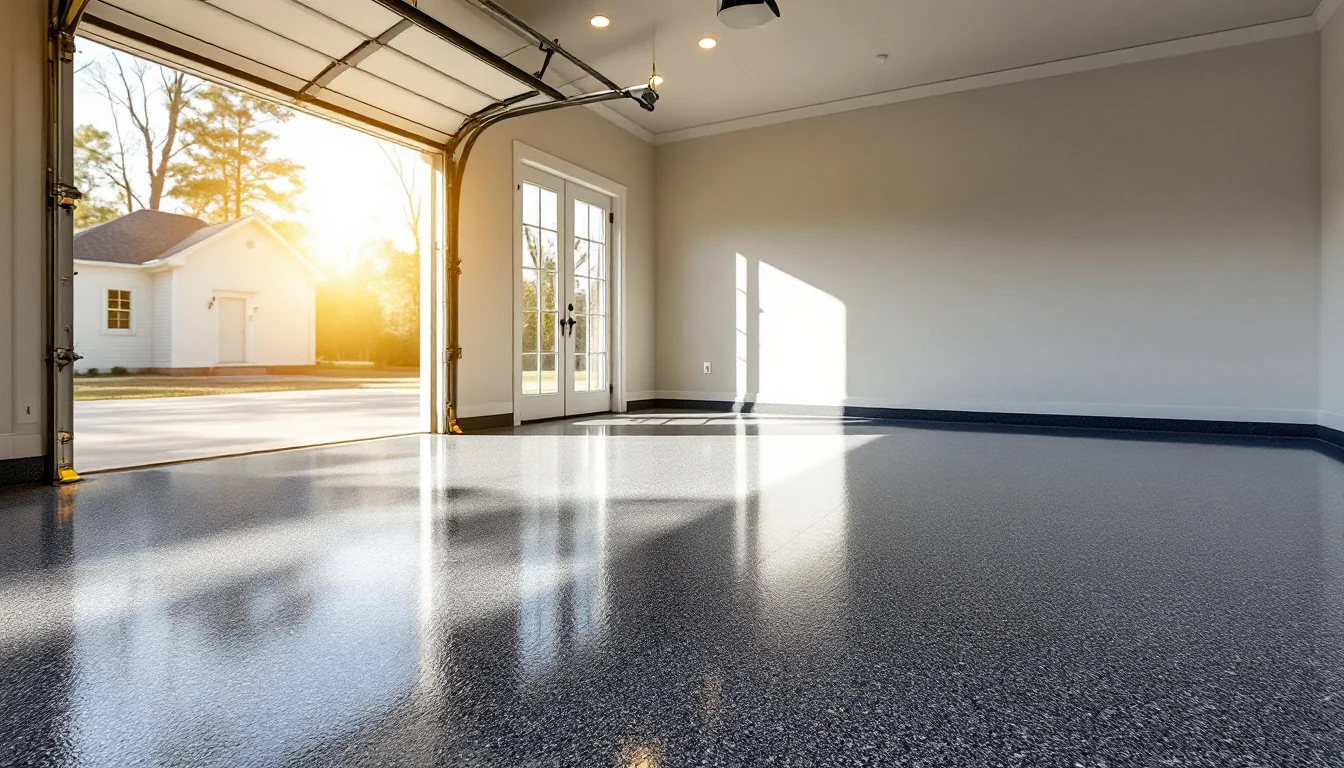
Garage floor coating in Huntsville runs $5–$9 per square foot installed, which puts a typical 2-car garage at $2,000–$3,800. That covers the whole build — diamond grinding, crack and spall repair, a moisture-tolerant base coat, full flake broadcast, and a polyaspartic topcoat. The layer-by-layer spec, products named, lives on our main garage coating page. This page is about what Huntsville's actual housing stock does to that work.
We coat Huntsville slabs poured anywhere from the 1920s to last year, and it's the prep plan that changes with the era, not the price per square foot. A 1948 pad behind an Old Town bungalow and a 2022 pour in Providence land in the same published range. What moves a quote around inside it is repair and moisture work — and that's where your neighborhood matters more than your square footage.
Same system everywhere. Different homework.
Neighborhood by neighborhood
Your part of town, your slab
In Five Points and Old Town, half the "garages" we measure were carports first. Somebody walled them in during the 60s or 80s, which means the floor is a thin parking pad wearing layers of paint older than we are. We grind to bare concrete and judge what's actually there before quoting repair.
Blossomwood and the Medical District are kinder — mid-century ranch slabs that were poured well and have mostly just collected fifty years of oil drips and sealer. Good bones, heavy cleaning, extra grinding passes over the drip zones.
Monte Sano is its own climate. Slabs up there sit cooler and shaded, leaf tannin stains the surface every fall, and we check slab temperature before topcoating instead of trusting the valley forecast. The stains grind out. The temperature just takes patience.
Jones Valley and Hampton Cove homes from the 90s and 2000s sit on expansive clay near the flank of the mountain, so cracks there get treated as moving joints with flexible filler — not rigid patch. Providence and Research Park slabs are newer and builder-grade: sound enough, but topped with a weak cream layer that has to come off under diamond tooling or nothing above it lasts.
One honest aside: if you're turning the garage into a gym or shop and don't care about flake color, get a quote for polishing instead. Nothing to peel, ever. It's the right call more often than coating guys like to admit.
| Area | Typical slab era | What we usually find |
|---|---|---|
| Five Points / Old Town | 1920s–1950s | Converted carport pads, thin pours, old paint layers |
| Blossomwood / Medical District | 1950s–1960s | Sound mid-century slabs, oil and sealer build-up |
| Monte Sano | 1950s–1990s | Cool, shaded slabs; leaf tannin staining |
| Jones Valley / Hampton Cove | 1990s–2000s | Expansive clay; cracks treated as moving joints |
| Providence / Research Park | 2000s–now | Builder-grade cream layer; needs full grind |
Tell us the neighborhood
Say the street and the garage size and we'll tell you what your slab era usually needs, with a real range, on the phone.
What the valley does to floors
Hot tires, red clay, and the rock under town
Tires coming home off a Redstone Arsenal commute can hold 130°F against the floor for the better part of an hour. Do that five days a week, every week, and a soft or thin coating gets pulled up by the tread as the rubber cools — hot tire pickup, the most common complaint in this city. The cure is chemistry that doesn't soften at tire temperature, which is exactly what the polyaspartic topcoat in our full system spec is there to do.
Then there's the red clay. It drains badly, holds water against the underside of slabs, and pushes vapor up through the concrete year-round. Moisture-sensitive base coats blister over it — it's the most common autopsy when we tear out a peeling coating someone else installed. We meter-test every slab instead of guessing.
And under everything, the valley sits on limestone karst. Most slabs never notice. The few that settle unevenly over it need slab repair, not a coating, and we'll tell you which one you have — a coating won't hold a moving floor together, and we'd rather lose the job than warranty that.
Most Huntsville garages take one day on the tools, and you're parking on the new floor in 24–48 hours. The factor-by-factor breakdown of what lands a quote at the low or high end is on the cost page.
Worth reading before you call anyone
What Moves the Quote
The published $5–$9/sq ft range, and the repair and moisture factors that slide a Huntsville slab inside it.
See the cost factors →The $200 Kit Question
Box-store epoxy over a Providence cream layer is how most peeling floors start. The honest math on doing it yourself anyway.
Read the comparison →Pick Your Flake
Every blend we broadcast, photographed flat — useful before the estimator shows up with the sample boards.
Browse colors →Questions we actually get
Can you coat the garage of an older house in Five Points or Old Town?
Will the leaf stains on my Monte Sano garage floor come out?
Why do garage coatings in Providence and Research Park fail so young?
Is the clay in Jones Valley and Hampton Cove a problem for a coating?
Get a number, not a runaround
Tell us what you're working with and we'll give you a straight price range on the phone. No pressure visit required to hear a number.