
Service area · Athens, AL
Concrete Polishing in Athens
$4–$8/sq ft · old slabs, honest expectations
Concrete polishing in Athens runs $4–$8 per square foot. Athens hands us the oldest concrete in our service area — and polishing is frequently the smartest thing to do with it. Not because old slabs are a problem to work around, but because the two things they carry, moisture and history, are things a polish handles better than any film.
Athens, specifically
Where old concrete becomes the point
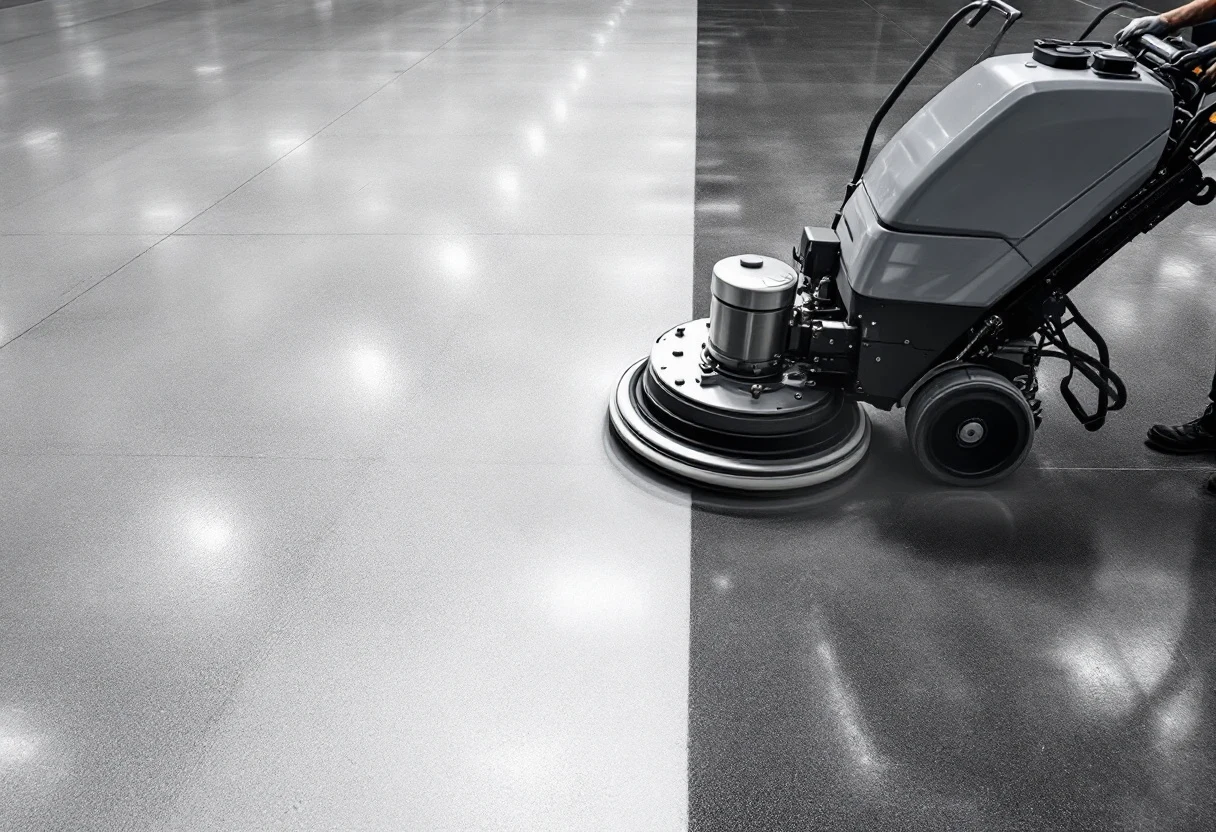
Concrete polishing grinds the slab with diamond tooling, hardens it with a densifier — a liquid silicate that reacts into the surface — and hones it to a chosen gloss. On a 1960s Athens slab, that process does something a coating can't: it makes the age an asset.
Old slabs polish with character: filled cracks, aggregate variation, and decades of history stay visible in the finished floor. Around the courthouse square, where retail and office slabs have lived under tile, carpet, and three generations of paint, the polished result reads like the building's biography. We fill what needs filling, we don't fake what doesn't.
The engineering reason matters as much as the look. Polishing sidesteps slab moisture entirely, because vapor passes through a polished floor instead of pushing against a coating film. Limestone County's older homes and storefronts sit on concrete poured before vapor barriers were standard practice, and those slabs move ground moisture every day of the year. Coat one without testing and mitigation, and the film loses eventually — the failure parade is documented in our moisture guide. Polish one and there's simply nothing for the vapor to fight.
Out past the square, the math takes over. At around 2,000 square feet and up, polishing usually beats coating on total cost for a shop or outbuilding slab. County properties with big metal buildings ask us to quote coatings, and sometimes the honest quote is "polish it instead, it's less money and you'll never recoat." We sell both, so that sentence costs us nothing and earns the next three referrals. The full both-sides comparison lives at polished concrete vs epoxy; the coating path for Athens garages is over on the Athens coating page.
| Condition found | What it means for polish |
|---|---|
| Hairline cracks, stable | Fill + polish through — visible as character |
| Old glue / paint layers | Removal passes added, priced by sq ft |
| Patches in foreign material | Cut out + repatch with cement-based fill, or accept contrast |
| Deep spalling / delamination | Honest no — overlay or coating territory |
| Moisture (any level) | Irrelevant to polish — proceed |
The test panel settles what the checklist can't.
Athens polishing number
Building age, square footage, what's on the slab. We'll tell you in one call whether polish or coating wins.
Polishing, deeper
The Polishing Service
Gloss levels, densifiers, and the full process — the hub page for everything polish.
Full service page →Cost, Broken Down
Why big floors price better, what removal work adds, and the published range.
See pricing →Moisture Problems
The North Alabama slab moisture story — and why polish is immune to the whole plot.
The moisture guide →Athens questions
Will the cracks in our old Athens slab disappear when it's polished?
Is polishing really cheaper than coating for a big shop slab?
Our courthouse-square building's slab has old tile glue and paint. Polishable?
Does a polished floor make sense for a pre-1980 house without a vapor barrier?
Get a number, not a runaround
Tell us what you're working with and we'll give you a straight price range on the phone. No pressure visit required to hear a number.