
Comparison · Huntsville, AL
DIY Epoxy Kit vs Professional
The honest math, including the case for the kit
A garage kit costs a couple hundred dollars and a weekend; a professional install costs real money and zero of your Saturdays. Most contractor pages stop there and sneer at the kit. We won't — there's one situation where the kit is genuinely the right call, and we'll tell you exactly what it is.
The math, with nothing hidden
What each route really costs
A big-box epoxy kit runs a couple hundred dollars plus a weekend; a professional coating system runs $2,000–$3,800 installed on a typical 2-car garage in Huntsville. That's a tenfold gap, and pretending it isn't real is how contractors lose the room. The honest comparison isn't price — it's price per year of floor. A professional garage floor coating is built to be the last floor the garage needs; the kit is built to look good at the register.
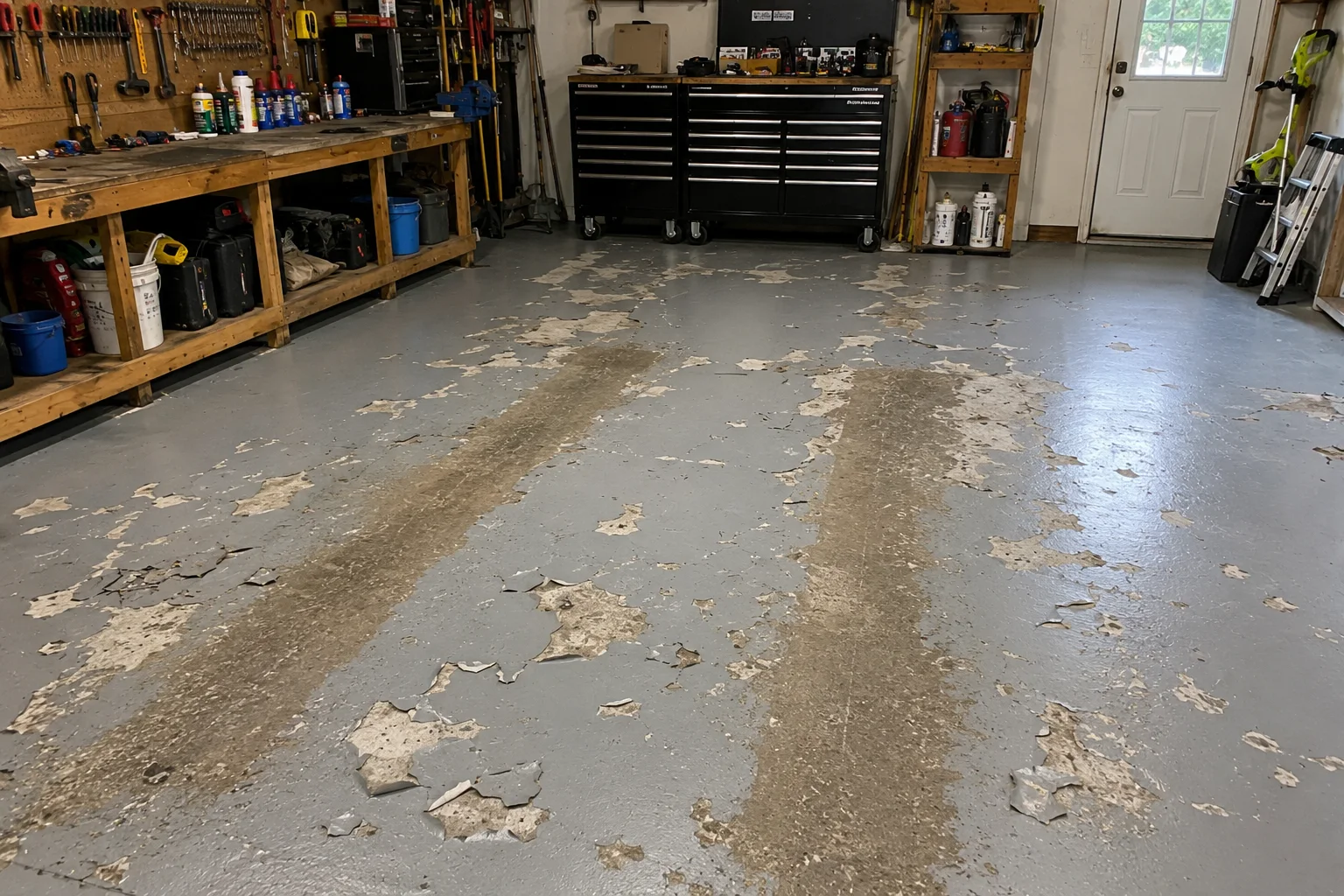
Grinding a failed kit off a 2-car slab is paid labor that happens before a new coating can start, so a failed DIY job adds to the eventual professional quote rather than denting it.
So the kit's true cost has three parts: the box, the weekend, and — if you're staying in the house — the grinding bill it leaves behind for whoever coats the floor properly later. What the professional number buys, line by line, is itemized on the garage floor coating cost page.
The part you won't hear from us twice
When we'd tell you to buy the kit
If you're selling the house inside a year or planning to demo the slab, buy the kit — it'll look fine in the listing photos, and that's all it has to do.
We mean that. A coating earns its price across years of parked cars, dropped tools, and red clay track-in. If the floor's future is a buyer's inspection or a demolition crew, those years never happen, and paying for them is just bad math. Etch it, roll it, sprinkle the chips, take the photos.
Everyone else, keep reading.
Reading the fine print for you
What the box doesn't say
The resin is thinner than you think. Kit contents are water-based epoxy laid at roughly 3 mils with paint chips on top; a professional system is 20-plus mils of resin with full-broadcast vinyl flake. Thickness is what stands between your tires and the concrete; at 3 mils there isn't much standing.
The prep is the real corner being cut. Kits prep with acid etch because a diamond grinder costs more than the kit itself; etch leaves a weaker bond, and the kit's epoxy has zero tolerance for moisture in the slab. Diamond grinding opens the slab mechanically so resin can key in. Etch is a chemical rinse that approximates that on a good day, on a clean slab, with perfect neutralizing — three conditions a typical garage doesn't offer.
"Chips" aren't flake. The decorative bits in the box are paint chips; professional floors use vinyl flake, broadcast until the base coat won't hold more. Different material, different thickness, different decade of service. The full comparison of looks is on our flake vs solid color page.
Moisture is the silent killer. North Alabama slabs push vapor, kit epoxy can't handle any of it, and the box has no way to warn you about your specific slab. The peeling starts at the tire spots a year later and spreads from there.
| DIY epoxy kit | Professional system | |
|---|---|---|
| Upfront cost | A couple hundred dollars + your weekend | $2,000–$3,800 installed |
| Resin | Water-based epoxy, ~3 mils | Commercial resin system, 20+ mils |
| Decorative layer | Paint chips, sprinkled | Vinyl flake, full broadcast |
| Prep | Acid etch from a jug | Diamond grinding + crack repair |
| Moisture handling | Zero tolerance | Moisture-tolerant base coat |
| Typical lifespan here | 1–3 years parked-in | 15+ years with basic care |
| If it fails | Paid grinding before anything new | Written warranty |
| Verdict | Selling within a year, or coating a slab you'll demo — spend the couple hundred and move on | Anyone keeping the house — the only version of this floor that's cheaper per year |
Already fighting a peeling kit floor?
Send a photo of the worst spot. We'll tell you straight whether it's a tear-out or whether you've got another year before it matters.
Go deeper
Garage Floor Coating
What the professional version includes, layer by layer, and what a quote covers.
See the service →Flake vs Solid Color
Real flake hides red clay and repairs; solid color shows everything. How to pick.
Read the comparison →What It Costs
Published ranges for a professional garage floor and the factors that move the number.
See the numbers →Questions we actually get
How long does a DIY epoxy kit actually last?
What's actually in the box for the money?
Can you coat over my failed DIY epoxy?
I'm handy. Can't I just rent a grinder and buy better materials?
Get a number, not a runaround
Tell us what you're working with and we'll give you a straight price range on the phone. No pressure visit required to hear a number.