
Guide · Huntsville, AL
How Long Does Polyaspartic Last?
15+ years residential · 15-year written warranty
A professionally installed polyaspartic floor lasts 15+ years in residential use with basic care, and ours carries a 15-year written warranty. The longer answer is more useful, because lifespan isn't really a property of the resin — it's a property of the install. This page sorts what shortens a coating's life from what only sounds like it does.
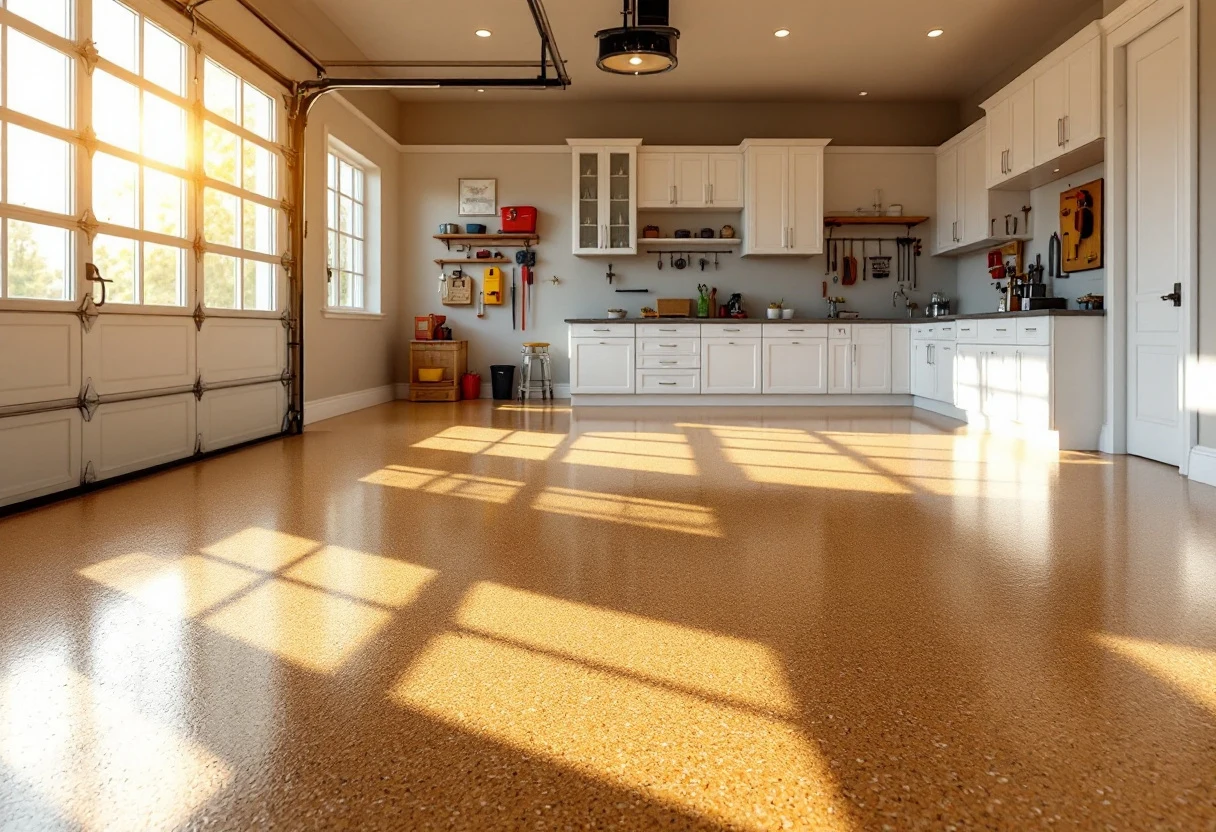
The real risk list
What shortens a coating's life
Polyaspartic is 100% UV-stable, so sun at the door line doesn't age it — what shortens a coating's life is bad prep, thin builds, and the wrong base coat. Notice that all three killers happen on install day. The resin going down on a properly built system has its lifespan mostly decided before you ever park on it.
Bad prep means etch instead of diamond grinding, or grinding rushed past oil spots and old sealer. The coating lies on the slab instead of keying into it, and lying isn't bonding. Thin builds are the quiet corner-cut — mils you can't see missing on day one and can't ignore missing in year three. The wrong base coat is epoxy under a slab that pushes moisture; the chemistry case is on the Simiron polyurea guide.
Coating failures announce themselves early: nearly everything we tear out let go at the bond inside its first 2 years, not from wear in year 10.
That's actually good news. A coating that makes it through two North Alabama springs without a blister has already passed the only test that usually fails one.
The false alarms
What doesn't shorten its life
Sun. Aliphatic chemistry doesn't yellow or chalk under UV, so the strip at the garage door ages like the strip under the shelves. Hot tires. On a sound bond, a parked car is just a parked car. The occasional road-salt winter. Rinse it out and move on — salt is bare concrete's enemy, not the topcoat's. The epoxy comparison, where two of those three genuinely are problems, lives on polyaspartic vs epoxy.
| Factor | Effect on lifespan | Notes |
|---|---|---|
| Surface prep | Decides everything | Diamond grinding keys the bond; etch-only prep is the #1 early killer |
| Mil build | Major | Thin builds wear through; this is where cheap quotes hide |
| Base coat chemistry | Major | Moisture-tolerant polyurea vs epoxy that peels on damp slabs |
| UV exposure | None | Aliphatic polyaspartic is 100% UV-stable |
| Hot tires | None on a sound bond | Hot-tire pickup is a bond failure, not a wear mode |
| Road-salt winters | None if rinsed | Salt attacks bare concrete, not the topcoat |
| Cleaning habits | Minor | Squeegee twice a year covers it |
The whole routine
Maintenance, in one short paragraph
Maintenance is a squeegee and a rinse about twice a year; there's no resealing schedule and no wax. Push the winter grit and pollen out the door in spring, do it again before the holidays, and hose off anything the cars drag in between. That's it. No product to buy, no schedule to remember, no coating-care aisle to stand in.
Floors that get even that much attention are the ones that make 15 look conservative.
Go deeper
What Is Simiron Polyurea?
The base coat the warranty rides on — and why the bottom layer decides the lifespan.
Read the guide →Polyaspartic vs Epoxy
Why the topcoat chemistry makes sun and hot tires somebody else's problem.
Read the comparison →What Are Torginol Flakes?
The middle layer: what full-broadcast flake adds to thickness and wear.
Read the guide →Questions we actually get
Do hot tires damage polyaspartic floors?
Does a polyaspartic floor need resealing every few years?
Will road salt or winter slush hurt the coating?
What's the single biggest factor in how long a coated floor lasts?
Get a number, not a runaround
Tell us what you're working with and we'll give you a straight price range on the phone. No pressure visit required to hear a number.