
Pricing · Huntsville, AL
Concrete Polishing Cost
$4–$8/sq ft · bigger floors price lower per foot
Concrete polishing in Huntsville runs $4–$8 per square foot — a 10,000 sq ft warehouse prices near $4, an 800 sq ft studio near $8. Six factors set where your floor lands in that range, and one of them — what's currently glued to your slab — matters more than all the others. This page covers all six, plus the honest case where polishing isn't the cheap option.
The range, explained
What sets your polishing price
The range covers the full process described on our concrete polishing page — diamond grinding through progressively finer tooling, a silicate densifier to harden the surface, and honing to the gloss you pick. No coating goes down, so nothing on the floor can ever peel.
The wild card is what's on your slab now. A bare warehouse floor goes straight to work. A floor buried under glued-down tile means grinding off mastic — old flooring adhesive — before polishing even starts, and that removal can rival the polish itself in machine hours.
Hand edging is priced by the linear foot, so a 1,200 sq ft office cut into five rooms can out-price an open 2,000 sq ft bay.
Slab condition matters too, and we won't guess at it. On larger floors we grind a test panel before the quote, so the number you get is built on your concrete, not a stock photo of someone else's.
| Factor | Effect on price |
|---|---|
| Floor covering & mastic removal | Glued-down tile or carpet means grinding the old adhesive off before polishing starts. Often the biggest line on a quote. |
| Slab condition | Spalls, gouges, and old patches need repair passes — and deep damage limits the finish we can honestly promise. |
| Gloss level | Satin takes fewer passes than mirror. Every step up in gloss is another full pass with finer diamonds. |
| Square footage | Bigger is cheaper per foot. Machine time gets efficient on open floors; small jobs carry the same setup cost. |
| Edge work | Every wall, post, and doorway gets hand-edged. Open layouts price better than chopped-up ones. |
| Joint filling | Commercial floors usually get control joints filled for wheel traffic. Priced by the linear foot. |
Get a polishing range today
Square footage and what's on the slab now — that's all the phone estimate needs.
The size curve
Why bigger floors cost less per foot
Coating prices scale mostly with material. Polishing prices scale with machine time, and machines love open floors.
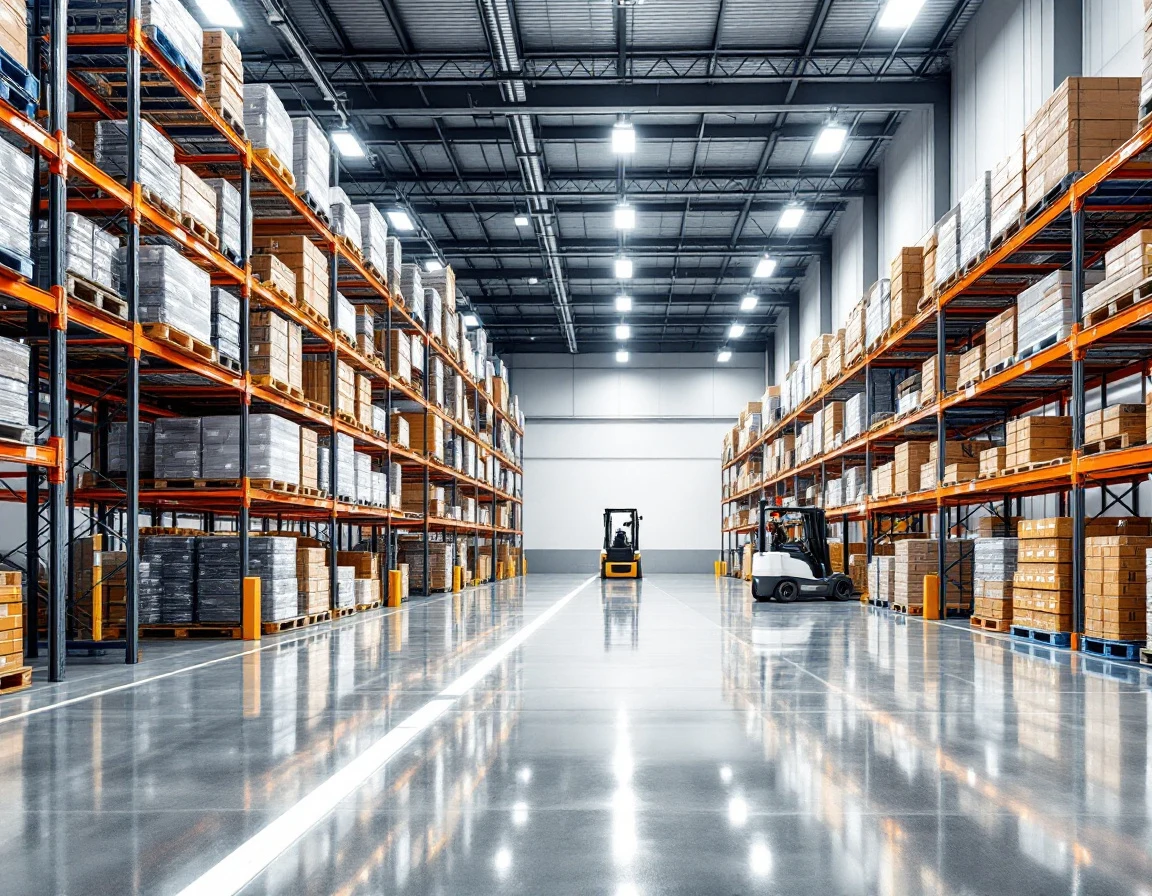
Polishing is one of the few floors where the per-foot price drops with size, because setup and machine mobilization spread across 20,000 sq ft instead of 800. Once the grinder is on your slab, every additional thousand feet of open concrete is the cheap part — long straight passes, no resets, no hand work. That's why the warehouse pays the low end and the boutique pays the high end for the identical finish.
It's also why polishing dominates commercial flooring math. A facility comparing floor systems across 20,000 sq ft is comparing decades of ownership cost, and polished concrete has no recoat schedule to budget for. If that's your situation, the commercial polishing page covers spec levels, dust control, and phasing work around your operation.
Honest fit check
When polishing costs more than coating
We sell both floors, so we'll just say it: sometimes polishing is the expensive option.
Below roughly 500 sq ft of chopped-up residential space, polishing often costs more than a flake coating — small rooms fight the machine. A laundry room, a hallway, a basement carved into four spaces — every doorway is a machine reset and every wall is hand edging. The same square footage as one open room can cost half as much to polish.
For small, cut-up residential spaces, a coating often delivers a finished floor for less, and it brings color options polishing can't. The honest side-by-side — written by the one local company with no horse in the race — is at polished concrete vs epoxy.
Where polishing wins regardless of size: slabs with moisture problems. There's no film for vapor to attack, so the comparison stops being about price.
Keep researching
The Polishing Service
What grinding, densifying, and honing actually do to your slab, gloss level by gloss level.
See the process →Commercial Polishing
Warehouse and retail floors, where the per-foot economics get genuinely good.
Commercial floors →Polished vs Epoxy
The honest comparison from the company that installs both and profits either way.
Read the comparison →Questions we actually get
Do oil stains and old paint come out when you polish?
Is joint filling required, or is it an upsell?
Can you polish a freshly poured slab?
Does a glossier finish cost more to maintain?
Get a number, not a runaround
Tell us what you're working with and we'll give you a straight price range on the phone. No pressure visit required to hear a number.