
Comparison · Huntsville, AL
Polyaspartic vs Epoxy
Aliphatic vs amine-cured — the chemistry, in plain English
Polyaspartic cures fast, never yellows, and stays slightly flexible. Epoxy builds thick and cheap, cures slow, ambers in sunlight, and goes brittle when it's thin. For a garage or patio topcoat, polyaspartic wins and it isn't close. Epoxy still has jobs it does better — and we name them below, because we install both.
The chemistry, minus the datasheet
Two resins that fail in opposite ways
Polyaspartic is an aliphatic compound — a cousin of polyurea — and it's the topcoat on every residential floor we install. Polyaspartic is aliphatic chemistry, and aliphatic means 100% UV-stable: ten years of afternoon sun at the door line won't yellow it. It also cures quickly and keeps a little flex after it sets, so a slab that moves with the seasons doesn't crack the film riding on it.
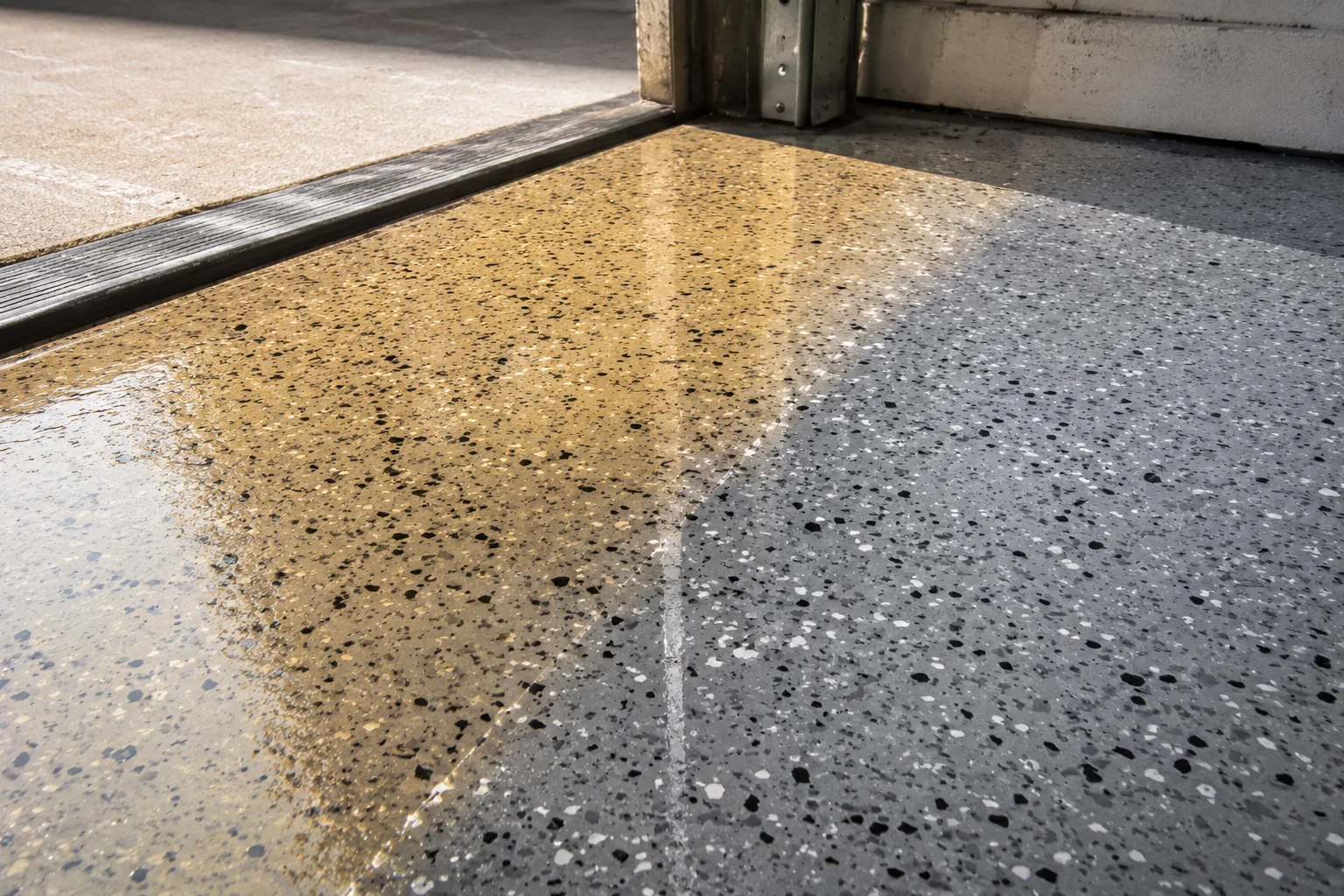
Epoxy is an amine-cured resin: two parts mixed, a slow chemical hardening, and a finished film that's hard, thick, and rigid. That rigidity is fine at a quarter inch. At the thin builds a garage floor actually gets, rigid means brittle — and brittle is how chips and spiderweb cracks start. UV is the other problem. Most epoxies are aromatic compounds, and sunlight ambers them, which is why so many garages around here have a yellow stripe exactly as deep as the afternoon sun reaches.
Polyaspartic takes foot traffic the next morning and vehicles in 24–48 hours; most epoxies want 3–7 days before a car parks on them. That cure-speed gap is the difference between losing your garage for a weekend and losing it for a week.
Honest fit check
Who shouldn't buy polyaspartic
Thick-build and chemical-containment floors. Epoxy builds thick and cheap — that's why 100%-solids epoxy still owns chemical containment and heavy industrial floors, and why we still install it on commercial jobs. If your floor needs to hold a battery-acid spill or carry forklift traffic over a quarter inch of resin, polyaspartic is the wrong tool and we'll say so on the first call.
Indoor floors away from sun, on a tight budget. A basement workshop or an interior storage room never sees UV, so epoxy's one big cosmetic failure never triggers. If the budget's tight and the slab is dry, a properly prepped epoxy down there is a defensible floor. We'd still want a moisture reading first — epoxy's intolerance of slab moisture doesn't care whether the room has windows.
Everyone else — garages, patios, shops with a roll-up door — should be looking at polyaspartic. Installed as the topcoat of a full coating system, polyaspartic runs $2,000–$3,800 for a typical 2-car garage in Huntsville.
| Polyaspartic | Epoxy | |
|---|---|---|
| Chemistry | Aliphatic — related to polyurea | Amine-cured resin |
| UV behavior | 100% UV-stable; won't yellow | Aromatic; ambers at the door line |
| Cure speed | Foot traffic next morning, vehicles 24–48 hr | Vehicles at 3–7 days, full cure ~7 days |
| Flexibility | Stays slightly flexible; moves with the slab | Rigid; brittle when applied thin |
| Build thickness | Thin, tough wear layers | Thick floods cheaply — its real strength |
| Cost | $2,000–$3,800 typical 2-car system | Cheaper per gallon, slower per job |
| Where it shines | Garages, patios, anything with a sun line | Containment, heavy industrial, indoor budget floors |
| Verdict | Homeowners, garages, patios — any floor that sees sun or needs to be back in service fast | Thick-build chemical containment, and indoor floors away from sun on tight budgets |
Not sure which resin your floor needs?
Tell us what the floor does for a living. If the answer is epoxy, we'll say epoxy — we install that too.
One layer down
The topcoat isn't the whole argument
This page compares topcoats, but most coating failures don't start in the topcoat. They start at the base coat, where the resin meets concrete and where slab moisture does its damage. That's a separate fight with a different winner — we walk through it on the polyurea vs epoxy page.
And if your real question is whether the premium chemistry actually pays off over time, the lifespan numbers are on how long polyaspartic lasts.
Epoxy's fine. It's just not what we'd put in our own garages, and now you know exactly why.
Go deeper
Polyurea vs Epoxy
The base-coat battle: moisture tolerance, flexibility, and why one-day installs exist at all.
Read the comparison →How Long Does Polyaspartic Last?
The lifespan question answered with numbers, plus what actually shortens a coating's life.
Read the guide →What It Costs
Published ranges for the full polyaspartic system and the factors that move a quote inside them.
See the numbers →Questions we actually get
Is polyaspartic just expensive epoxy?
Can you apply polyaspartic over old epoxy?
Why does epoxy yellow and polyaspartic doesn't?
When is epoxy actually the better buy?
Get a number, not a runaround
Tell us what you're working with and we'll give you a straight price range on the phone. No pressure visit required to hear a number.