
Comparison · Huntsville, AL
Polished Concrete vs Epoxy
$4–$8/sq ft polished · $5–$9/sq ft coated
We install both, which makes this the rare comparison with no dog in the fight. Short version: polishing wins big open square footage and anyone who wants stone instead of plastic. Coatings win chemical exposure, color, and damp working garages. The useful part of this page is who shouldn't buy each.
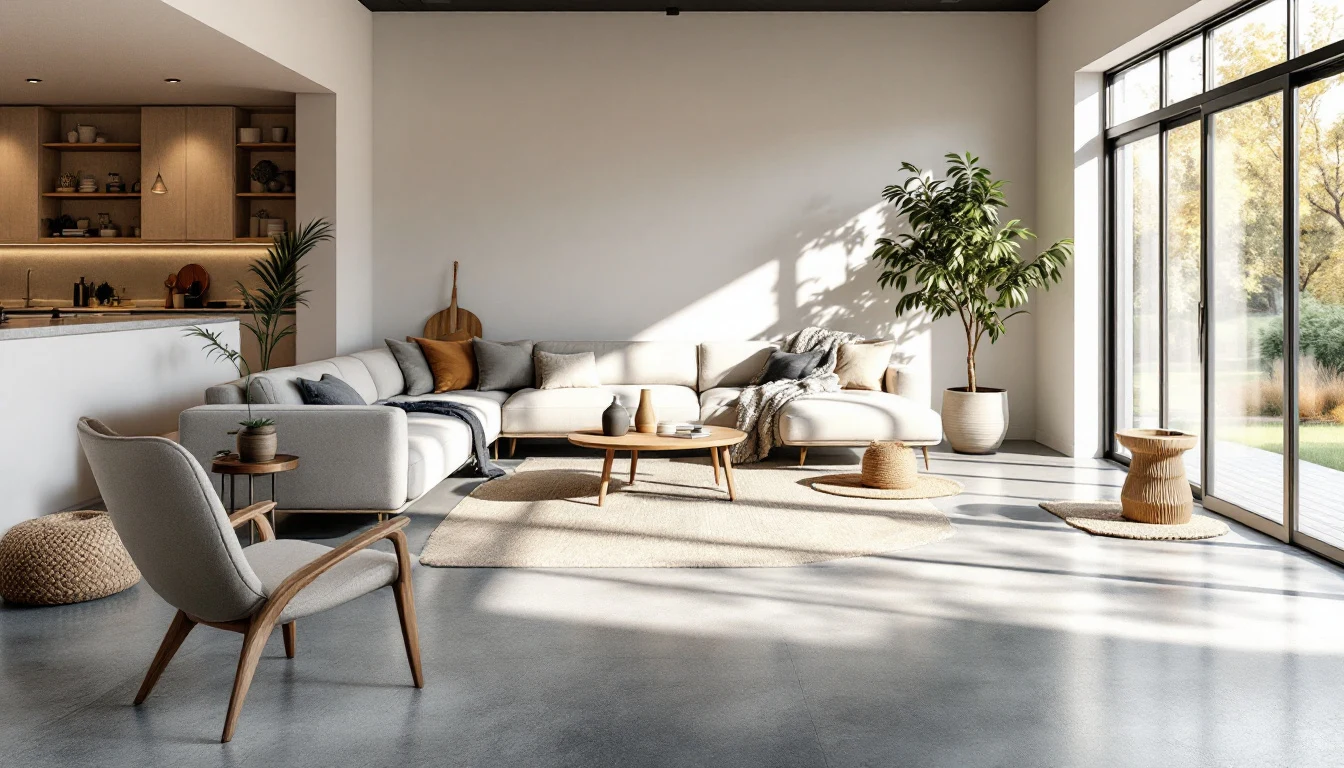
The short answer
Two different products, not two grades of one
Polished concrete is the slab itself, ground flat with diamond grinding through progressively finer grits and hardened with a densifier — a liquid silicate that makes the surface dense enough to shine. Nothing is added that can peel, because nothing is added at all. An epoxy floor is the opposite move: a two-part resin cured into a plastic wear layer on top of the slab, the approach behind our commercial epoxy work.
Most companies in this market sell one or the other, so every comparison you've read so far was written by somebody's sales department. We sell both. When polishing is wrong for your slab we'll say so, and the next two sections say so in print.
Honest fit check, part one
Who shouldn't polish their concrete
Slabs that need waterproofing or chemical containment. Concrete is porous and polish keeps it that way. If your floor has to hold a battery-acid spill, a brewery wash-down, or anything that can't be allowed into the slab, you need a film on top — that's coating territory, full stop.
Badly spalled or patched-up slabs. Polishing reveals the slab; it can't hide it. A floor full of spalls, mismatched patches, and crumbling joints will look like a polished floor full of spalls, mismatched patches, and crumbling joints. Grinding deeper helps some slabs and embarrasses others, and we'll tell you which yours is before any deposit changes hands.
Anyone who wants color or flake. Polish gives you the stone you already own — grays, exposed aggregate, a lot of subtlety. If you're picturing a charcoal flake floor or a brand color underfoot, you're picturing a coating. That's the Rocket City System on the residential side, epoxy on the commercial side.
Honest fit check, part two
Who shouldn't buy a coating
Moisture-heavy slabs. Low-lying slabs around here — closer to the Tennessee River, poured over poorly drained clay — can push enough vapor to test any film you put over them. Moisture-tolerant base coats handle normal Huntsville slabs fine, but on a genuinely wet slab the breathable floor wins. Polish has nothing to blister.
Spaces that want a zero-maintenance stone look. A coating is plastic, and it reads as plastic. If the brief is bare, mineral, nothing-to-ever-recoat — a polished slab is that brief. Epoxy's fine. It's just not what you described.
Big open square footage. Past roughly 10,000 square feet of open floor, polishing usually wins on price, because grinding gets cheaper per foot as the machine runs uninterrupted while coating costs stay pinned to material. Warehouse managers comparing bids already know this; homeowners comparing a garage rarely hear it. The math lives on the polishing cost page and the coating cost page.
| Polished concrete | Epoxy coating | |
|---|---|---|
| Durability | No layer to peel — the shine is the slab | Tough wear layer, but a layer; bond quality decides everything |
| Moisture handling | Breathable. Slab vapor passes through | Film traps vapor; needs a moisture-tolerant base or mitigation |
| Maintenance | Dust mop, neutral-pH cleaner, periodic re-burnish | Squeegee and hose; nothing to re-burnish |
| Cost | $4–$8/sq ft — drops further at scale | $5–$9/sq ft — tied to material, not room size |
| Look | Exposed stone and aggregate; gray is the palette | Any color, flake blend, or metallic you want |
| Repairability | Re-polish a worn lane locally, cheap | Patches show; big damage usually means recoating |
| Downtime | Walk on it the same day it's burnished | 24–48 hours before vehicles |
| Verdict | Big open slabs, warehouses, retail, anyone who wants stone instead of plastic | Working garages, chemical exposure, anyone who wants color or a membrane on top |
Not sure which slab you have?
Describe the floor and what lands on it. We'll tell you on the phone which way we'd go — including when the answer costs us the bigger ticket.
The part nobody prints
How each one fails, and what fixing it costs
A coating fails at the bond. When it goes, it peels, and the fix is grinding the failure off and starting over — which is why prep is most of a coating quote. Polish fails by dulling: traffic lanes lose their sheen over years of grit and wheels. The fix is re-burnishing or re-polishing just the lane, which costs a fraction of redoing a floor.
That difference in failure mode, more than any line in the matrix above, is why warehouses polish and garages coat.
Go deeper on either side
Concrete Polishing
What grinding to a shine actually involves, grit by grit, and which slabs are good candidates.
See the service →Commercial Epoxy Flooring
Where we still specify epoxy on purpose: thick builds, chemical exposure, branded floors.
See the service →Polished Concrete Maintenance
Dust mop, neutral-pH cleaner, no wax ever. The whole routine on one page.
Read the guide →Questions we actually get
Is polished concrete cheaper than epoxy?
Which lasts longer, polished concrete or epoxy?
Can you polish a garage floor instead of coating it?
Does polished concrete work on slabs with moisture problems?
Get a number, not a runaround
Tell us what you're working with and we'll give you a straight price range on the phone. No pressure visit required to hear a number.