
Comparison · Huntsville, AL
Polyurea vs Epoxy
The layer you never see decides whether the floor survives
The base coat is where coatings live or die — it's the layer touching the concrete, taking the slab's moisture and movement. Polyurea tolerates damp concrete, stays flexible, and recoats in 1–2 hours. Epoxy is cheaper and slower and rigid. On North Alabama slabs, that's not a close call, and here's the whole case.
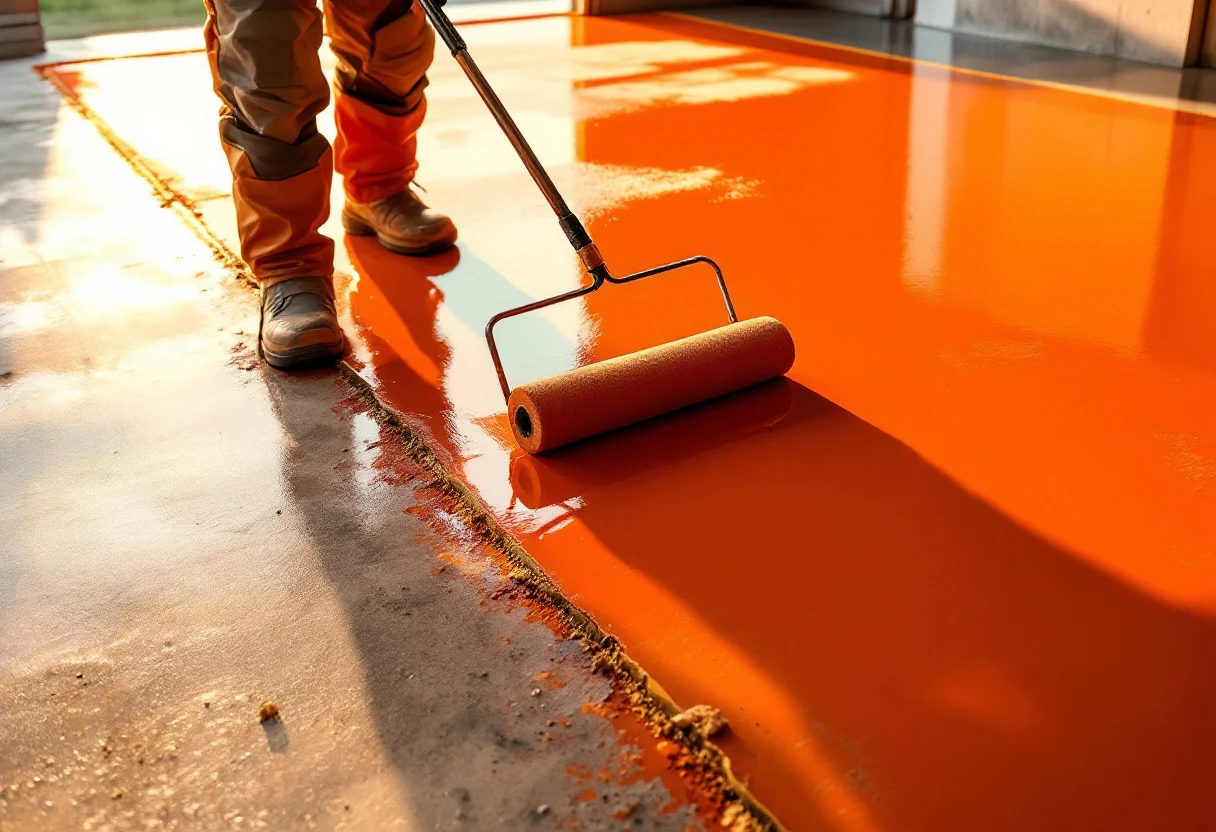
Why the base coat is the fight that matters
Three properties, three wins
Moisture tolerance. Polyurea tolerates moisture during cure, meaning vapor moving up through the slab won't stop it from bonding — while curing epoxy is famously unforgiving of damp concrete. Slabs around here sweat every spring — clay holds water, and that water moves up through concrete as vapor. It's the reason the base coat of the system we install is polyurea and not the cheaper resin.
Flexibility. Cured polyurea keeps some stretch where epoxy cures rigid, so seasonal slab movement on North Alabama clay flexes the film instead of shearing the bond. A rigid film bonded to a moving slab has exactly two options: crack, or let go. We've torn out enough peeled epoxy to know it usually picks both.
The recoat window. A polyurea base coat is ready to recoat in about 1–2 hours; an epoxy base coat typically wants overnight — that recoat window is the entire reason a one-day coating install exists. Grind in the morning, base coat and flake by midday, topcoat before the crew leaves. With an epoxy base, that same floor is a two-day job minimum, and every extra day is another chance for weather, dust, or a curious dog to get involved.
The interesting part
Why every DIY kit is epoxy anyway
Nearly every DIY garage kit is epoxy for 2 honest reasons: the resin is cheap, and a slow cure gives a first-timer 30-plus minutes of working time where polyurea would skin over before the second batch was mixed.
That's not a knock on you — it's product design. A boxed kit has to survive a buyer who's never coated anything, so the manufacturer picks the resin that's forgiving to spread, not the one that holds up under a slab that sweats. Cheap plus slow equals forgiving. It doesn't equal durable.
Polyurea went the other way. It's a crew product: short working time, fast recoat, no patience for hesitation. The same chemistry that would wreck a homeowner's Saturday is what lets a trained crew hand back a finished floor by dinner.
Epoxy's fine where it's specified honestly. As the base coat under a residential floor in this climate, it's the cheap part hiding in an expensive failure.
| Polyurea | Epoxy | |
|---|---|---|
| Moisture during cure | Tolerates slab vapor while bonding | Bond fails on damp concrete |
| Flexibility | Keeps stretch; moves with the slab | Rigid; cracks when the slab moves |
| Recoat window | ~1–2 hours — one-day installs | Overnight between coats |
| Working time | Minutes; crews only | 30+ minutes; amateur-friendly |
| Cost per gallon | Higher | Lower — why kits are epoxy |
| Thick builds | Not its job | Builds thick economically |
| DIY availability | Effectively none | Every hardware store shelf |
| Verdict | Base coat under any residential floor in this climate — anyone who wants one day of downtime | Dry, tested slabs needing thick builds; weekend DIYers who accept the tradeoffs |
Want the base coat argument applied to your slab?
Tell us the garage's age and whether the floor ever darkens after rain. That's usually enough to know which chemistry your slab will tolerate.
Where this fits
Base coat down, topcoat to go
Polyurea wins the bottom layer, but it's not the wear surface — UV stability and scratch resistance are the topcoat's job, and that's a different matchup with its own page: polyaspartic vs epoxy.
If you want the specifics of the exact polyurea we run — and why we standardized on one manufacturer instead of chasing whatever's cheapest each quarter — that's covered in what is Simiron polyurea.
One sentence summary: the floor you see is the topcoat, but the floor you keep is the base coat.
Go deeper
What Is Simiron Polyurea?
The specific base coat we run, why one manufacturer, and what moisture tolerance means in plain terms.
Read the guide →Polyaspartic vs Epoxy
The topcoat side of the same argument: UV stability, cure speed, and who should pick which.
Read the comparison →The Full System
Polyurea base, flake broadcast, polyaspartic topcoat — every layer named and specced.
See the system →Questions we actually get
Is polyurea the same thing as polyaspartic?
Why don't hardware stores sell polyurea kits?
Is epoxy ever the right base coat?
Can polyurea go over damp or freshly poured concrete?
Get a number, not a runaround
Tell us what you're working with and we'll give you a straight price range on the phone. No pressure visit required to hear a number.