
Polished concrete · Huntsville, AL
Concrete Polishing in Huntsville
$4–$8/sq ft installed · satin to high gloss
Concrete polishing in Huntsville runs $4–$8 per square foot installed. We grind the slab with progressively finer diamond tooling, harden it with a densifier — a liquid silicate that reacts with the concrete to make the surface itself harder — then hone it to the gloss you pick. No coating goes down. The concrete is the floor, so there's nothing to peel.
The mechanics
Polishing is grinding, not coating
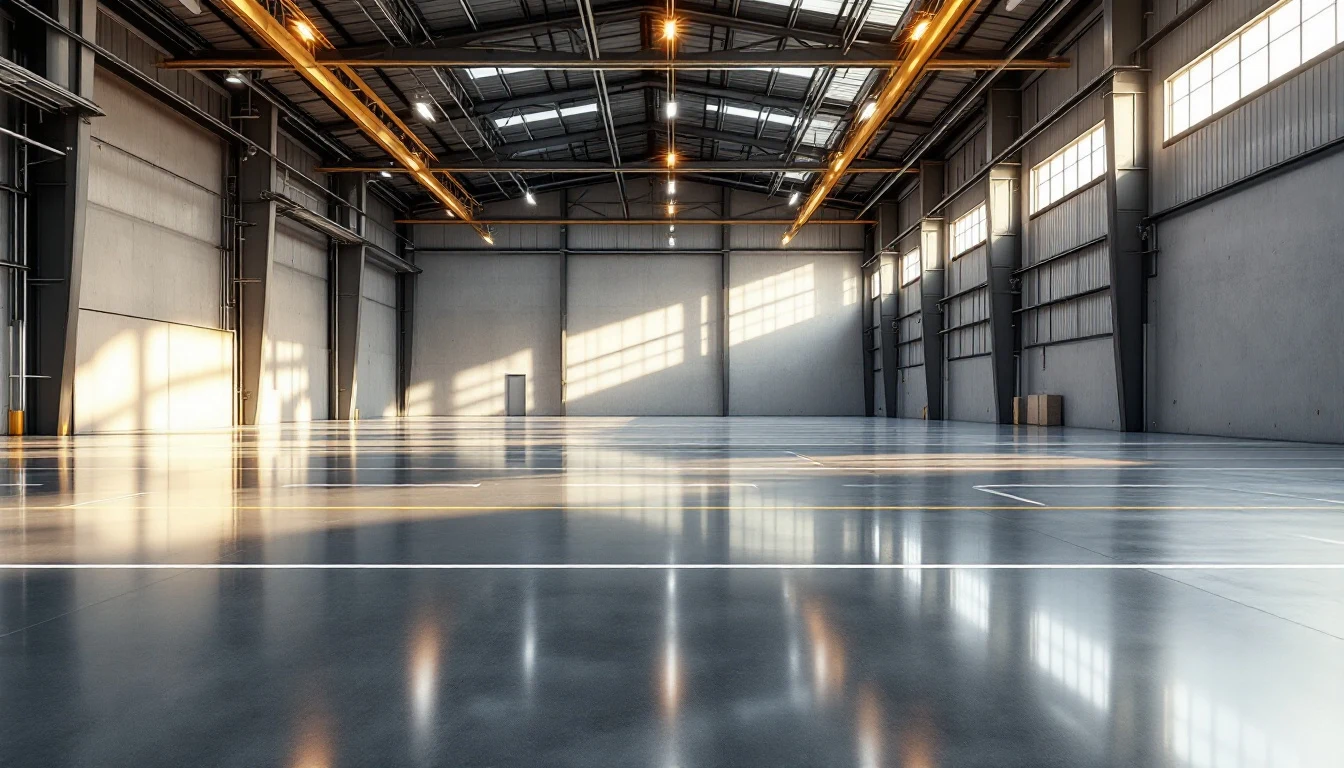
Everything we do to a polished floor is subtraction and chemistry. Diamond grinding cuts the slab open, the densifier hardens what's left, and each finer grit erases the scratch pattern of the one before it. Stop early and you get a soft matte. Keep going and the floor starts reflecting the room. A 400-grit polish reads as satin, 800 grit as semi-gloss, and 1500–3000 grit as high gloss.
The step-by-step is on the full polishing process page, grit by grit — tooling, densifier chemistry, the works. This page is about Huntsville slabs specifically, because the slab you have decides most of what the floor becomes.
A typical Huntsville residential polishing job takes 2–4 days on site. Commercial spaces run longer with phasing, but there's no cure window at the end — when the last pass is done, you walk on it.
| Finish | Final grit | What you see | Where it fits |
|---|---|---|---|
| Satin | ~400 | Soft sheen, no glare | basements, kitchens, bedrooms |
| Semi-gloss | ~800 | Clear reflection at a distance | living areas, offices, retail |
| High gloss | 1500–3000 | You can read the windows in it | showrooms, lobbies, statement floors |
Old concrete, on purpose
Why 60-year-old Huntsville slabs polish with character
A lot of our residential polishing happens in houses that predate the interstate. Five Points and Medical District bungalows getting walls opened up, where the new great room sits on a patchwork of original slab. Owners pull the carpet, see concrete, and call us asking if it's salvageable. It usually is — and it's usually better than salvageable.
Here's the honest part. Slabs poured in the 50s and 60s weren't placed with polishing in mind, so aggregate exposure varies — grind one corner and you'll hit river gravel, grind another and it's nearly all cream. We cut a test area before quoting a finish, because we'd rather show you the floor's actual personality than promise you a catalog photo.
Most owners end up liking the variation more than the uniformity they thought they wanted.
The other end of the residential spectrum is up the mountain: Monte Sano builds where exposed concrete is the design, not the compromise. Those floors get specced at pour time, polish clean and consistent, and cost less per square foot because we're not correcting seven decades of history first.
Got a slab under that carpet?
Tell us the neighborhood and the square footage. We'll tell you what a test grind would show before you commit to anything.
Beyond the living room
Basements, Research Park, and the Parkway
Basement slabs are where polishing quietly beats every other floor in this valley. Below grade, moisture vapor moves up through the concrete all year, and anything with a film — paint, epoxy, glued-down LVP — eventually argues with that vapor and loses. A polished floor doesn't have the argument. The vapor passes through, the densifier keeps the surface hard, and the floor stays a floor.
Commercially, the math is about maintenance. Office and flex space in Research Park mostly wears carpet tile or VCT, and VCT means strip-and-wax cycles forever. Polished concrete never needs recoating — a re-burnish every 3–5 years keeps the sheen in high-traffic spaces. For retail along the Parkway, add light: a semi-gloss floor bounces fixture light back into the merchandise instead of eating it. The upkeep details are in the polished concrete maintenance guide — it's a short read because there isn't much to do.
When isn't polishing the answer? When you need a waterproof membrane, when the slab is spalled past what grinding can reach, or when you want the color and texture of flake — that's a coating job, and we'll say so. The polished concrete vs epoxy comparison lays out both sides, and the Huntsville garage coating page covers the coated route for garages. We install both, so we don't have to bend the answer.
Go deeper
How We Polish a Floor
The full grit sequence, the densifier chemistry, and what each pass does — the complete process page.
See the process →Polishing Cost, Itemized
The published $4–$8/sq ft range and the specific things that move a Huntsville quote inside it.
Run the numbers →Polished vs Epoxy
Two good floors, different jobs. The honest decision guide for when each one wins.
Compare honestly →Questions we actually get
Why does the polishing price move inside the published range?
Can you polish the slab under a 1950s Five Points house?
Does polished concrete work in a Huntsville basement?
Can you polish an occupied office in Research Park without shutting it down?
Get a number, not a runaround
Tell us what you're working with and we'll give you a straight price range on the phone. No pressure visit required to hear a number.