
Service area · Harvest, AL
Garage Floor Coating in Harvest
$5–$9/sq ft · specced for slabs that move
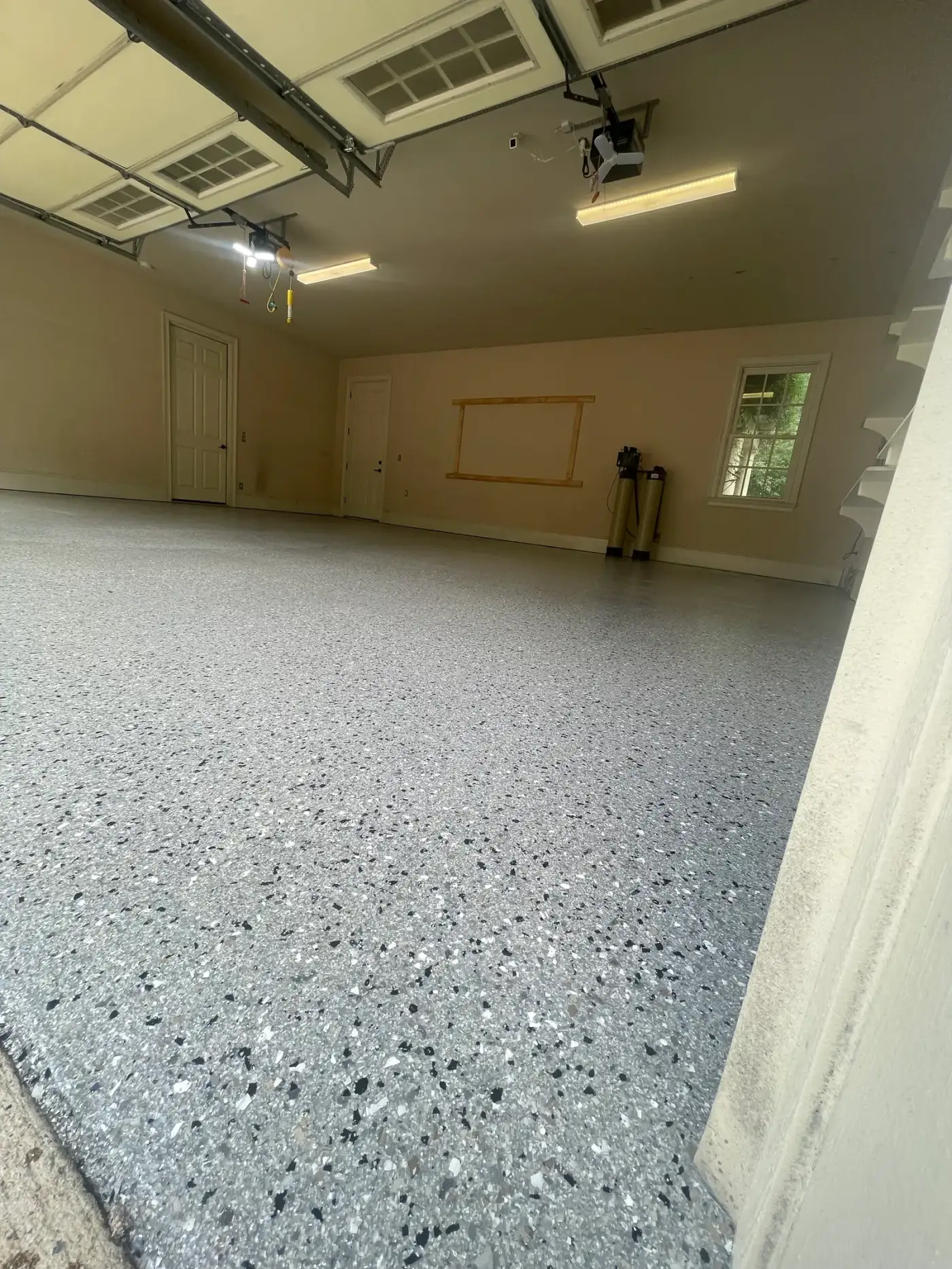
Garage floor coating in Harvest runs $5–$9 per square foot, with a typical 2-car garage at $2,000–$3,800 installed. Price isn't the Harvest question, though. The Harvest question is clay — the kind that swells every wet spring under some of the newest slabs in the valley — and whether your coating was chosen by someone who's thought about that. Ours was.
Harvest, specifically
Coating a floor that refuses to hold still
Everything about coating a garage floor out here starts with what's under the concrete. Most Harvest housing was built after 2000 on expansive clay that swells when it rains and shrinks when it doesn't, so the slabs move a little every year. You can see it in the neighborhood: hairline cracks in five-year-old driveways, doors that stick in April and swing free in September. The slab in your garage lives on the same clay.
That movement is exactly the argument for the system we install. A polyurea base coat stays slightly flexible after cure, which is why it rides out seasonal slab movement that cracks rigid epoxy films. It's the difference between a film that rides the slab and a film that fights it — and on Harvest clay, the rigid film loses every time. The chemistry details live on the Rocket City System page.
The repairs matter as much as the coating. Crack repairs on moving slabs need flexible polymer fillers, because a rigid patch on a moving slab just becomes the next crack. We rout every crack and fill with material that moves with the slab. It's a small line on the quote and a large reason the warranty survives Alabama springs.
Harvest garages are also just bigger. Three-car bays are the local default, lots run large, and half the properties we visit have a detached shop waiting for the same treatment. Bundling both buildings on one mobilization is the best per-foot pricing we can offer anyone — worth asking about.
New-build owners, one timing note: concrete needs at least 28 days of cure before coating, and a slab that's seen a full season is better. If you just closed on a build off Sparkman, we'd rather meter-test and schedule honestly than coat a slab that's still shedding water. The cracked garage floor guide covers what's normal and what isn't while you wait.
| Component | Standard | On expansive clay |
|---|---|---|
| Base coat | Simiron polyurea | Same — flexibility is the point |
| Crack fill | Polymer filler | Flexible-grade polymer, routed wider |
| Joint treatment | Fill or honor joint | Honor moving joints — never bridge them |
| Expectation set | No new cracks likely | Rare cosmetic telegraphing possible — said out loud |
Same price either way. The spec just gets smarter.
Harvest estimate, while you're thinking about it
Garage, shop, or both buildings on one trip — tell us sizes and we'll price the bundle.
Worth reading before you call
Cracked Floors, Triaged
Shrinkage, settlement, or movement — how we tell them apart and which ones a coating can live over.
Crack guide →The Full System
Why a flexible polyurea base beats rigid epoxy on slabs that move. Diagram included.
See the spec →Polishing in Harvest
New construction has a polishing window most owners miss. If your build is still underway, read this first.
The other option →Harvest questions
Our Harvest slab already has cracks at five years old. Is that normal?
Will the coating crack again when the clay moves?
We've got a three-car garage and a shop slab. Does the second building change the price?
Harvest isn't really a town — do you actually come out here?
Get a number, not a runaround
Tell us what you're working with and we'll give you a straight price range on the phone. No pressure visit required to hear a number.